We Love You, Bunny by Mona Awad — Review
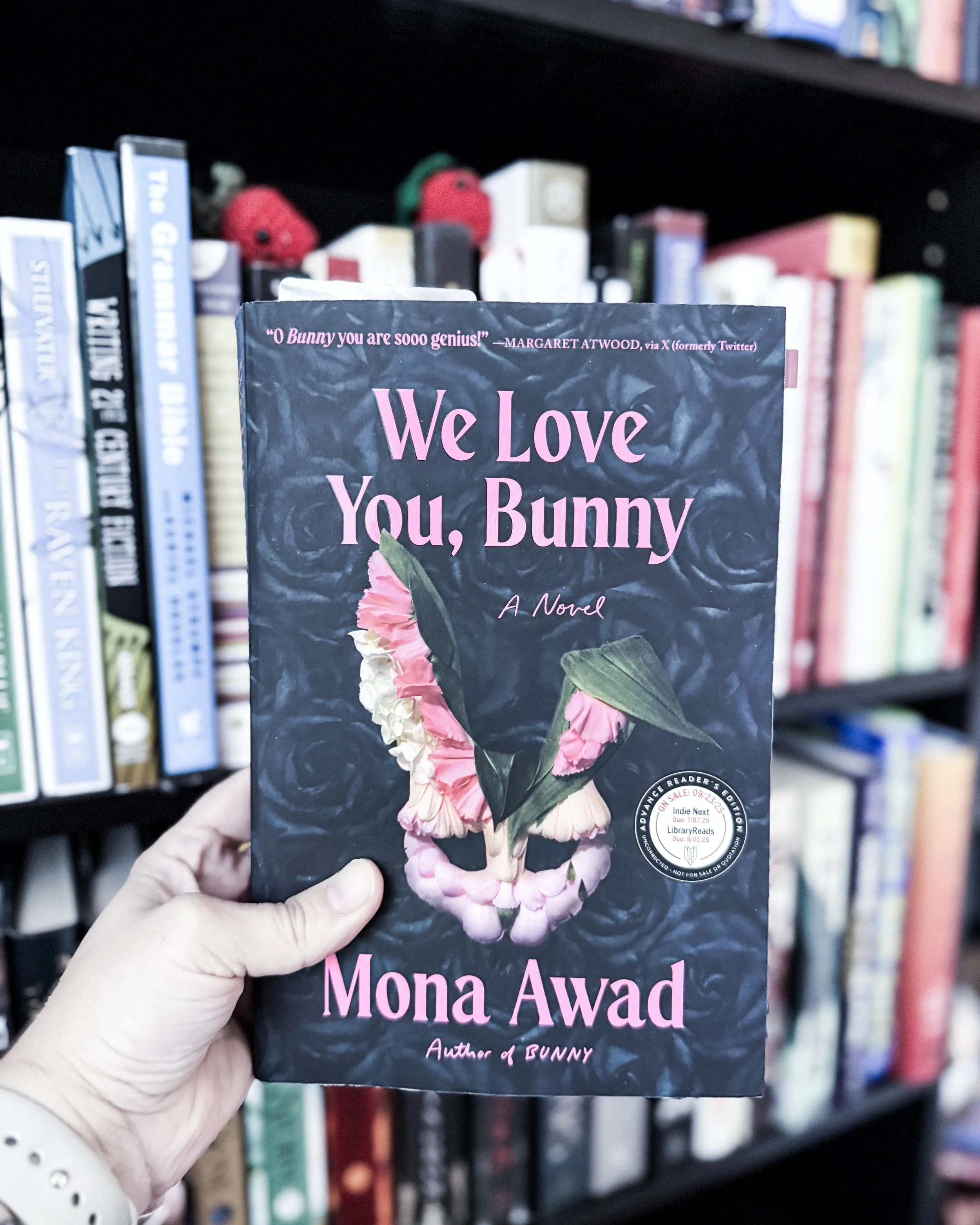
We Love You, Bunny by Mona Awad - Review Snapshot:
What mood is this right for: You’re ready for answers, Bunny.
Length: 496
Genre: Literary Fiction | Horror
Source: Review Copy Provided By Mary Sue Ricci Books
Where to Buy: Amazon | Kobo | Bookshop.Org | Libro.FM
Vibes Rating: ⭐⭐⭐⭐
CAWPILE Rating: ⭐⭐⭐⭐
1 Sentence Summary: What’s next, Bunny? We’ve been asking ourselves that for a year, waiting for this release.
⚠️ Spoilers for Bunny below - if you have not read the first book, proceed at your own risk ⚠️
“I saw the word tidy. I saw the word contrived. I saw the word pacing and I saw the word structure and I knew you’d gone to a state school.”
Synopsis:
Samantha Heather Mackay is celebrating the success of her novel Bunny with a nationwide tour. When her stop brings her back to the New England town where she completed her MFA, the stars of her story kidnap her to set the record straight… or straight according to them. Misery meets Frankenstein, this prequel/sequel hybrid answers all your lingering questions from Bunny.
My Thoughts:
When you’re reviewing a satire of the entire writing system, it’s tough to do so and still feel authentic. So my thoughts on this book are going to be generally incoherent and a bit all over the place. For example, was Aerius’s section too long and dragging in the middle, or was that intentional—a commentary on what happens when your story gets away from you and on readers’ limited attention spans? The number of times she mentions pacing before we even reach Aerius’s chapters is… a lot.
You see, Bunny, it’s complicated. Art doesn’t always fit into the boxes of literary analysis. We try so hard to put bounds around all art, and sometimes it just exists because someone created it. And it’s beautiful for that reason.
The CAWPILE Review of We Love You, Bunny
Characters - 10
“The minute I began to love, Reader, I began to lie, it seems.”
As always, Awad’s characters are the stars. It’s difficult to explain how they all blend yet remain distinct at the same time. For me, the standout was Aerius—despite my complaints about his chapter’s length. His development throughout the story, and what it represents, was top-notch.
Atmosphere/Setting - 9
Awad builds a world that is both dreamlike and claustrophobic. The setting folds in on itself, reflecting the creative and psychological traps her characters inhabit.
Writing Style - 10
“It’s called a proem,” I said. “I find form limiting,”
Mona Awad’s writing is 100 % written for me exactly. I love long sentences: ones that go on a quick side quest, a parenthesis here, an em dash there, a pause, a quick pivot, and we’re back; don’t even get me started on a semi-colon (sorry for making any editor's eyes bleed with that one).
To get back to the actual point, there are a lot of side quests in Awad’s character's speech, and I love it. It gives such a unique voice. She finds ways to always incorporate plays on words that make sense.
Plot - 7
The pacing during the Aerius chapters dragged for me. Even if that was intentional, it felt a little off compared to Bunny. Still, the story has a clear direction and delivers on its promise: answers, closure, and chaos.
Intrigue - 8
This book came with all the answers to the questions we had in Bunny. There are two main thoughts here.
That getting answers to all those questions gave the entire story arc some resolve.
That getting all the answers to everything in Bunny ruined the intrigue. I lean towards the former.
It’s interesting to see people demonstrate some of the points. Like, this is Mona Awad’s Aerius, her Bunny, and when she provides the reader with answers, they’re mad that the creation wasn’t theirs anymore. I want to be clear: I don’t think people are wrong for wanting that, but it is exciting.
Logic/Relationships - 9
“Twas real enough for me”
Nothing about these books makes sense, and so everything makes sense. Despite being set in an utterly strange world—where we’re turning bunnies into men—it all fits. It all feels real within Awad’s logic. That’s the magic of her absurdity.
Enjoyment - 9
I just loved this despite the drop in pace in the middle. This was everything I wanted it to be
Overall score = 62/7=8.85 = 4 Stars
Final Thoughts
Loved this follow-up. I saw a lot of criticism online from people who didn't like that the author gave us direct answers to so many questions left lingering after Bunny. I get this from a reader's perspective, but I also feel like it’s the author's right to give us the correct answers to the questions she posed.
If you liked Bunny and enjoy Mona Awad, I would suggest picking this up, but go into it with the understanding that you’re going to get answers whether you want them or not.
“Creation shouldn’t be a struggle. You shouldn’t go chasing it.”
We Love You, Bunny by Mona Awad FAQ:
Why do you have two different star ratings?
The vibes rating is always my immediate ‘this was probably X star,” the CAWPILE is after I have reflected, thought about it more in-depth. Sometimes the vibes are lower than the CAWPILE, sometimes it’s the other way around.
What genre is this book?
We Love You, Bunny blends dark academia, horror, psychological satire, and metafiction. It’s eerie, campy, and self-aware—equal parts horror story and literary fever dream. Expect cultish rituals, surreal humor, and plenty of “what did I just read?” moments.
Who is Mona Awad?
Mona Awad is a Canadian author known for genre-bending dark comedies like Bunny, All’s Well, and Rouge. Her writing often dives into obsession, identity, beauty culture, and the messy underbelly of creativity. She’s basically the literary patron saint of weird girl energy.
Is We Love You, Bunny scary?
It’s unsettling more than terrifying. The horror is psychological and symbolic—think cult rituals, dream logic, and moments of body horror rather than jump scares or gore. It’s the kind of story that crawls under your skin and stays there.
Trigger Warning for We Love You, Bunny by Mona Awad
Source: StoryGraph
Graphic
Violence, Murder, Animal death
Moderate
Sexual content, Kidnapping, Suicidal thoughts
Minor
Eating disorder, Body shaming, Classism
We Love You, Bunny by Mona Awad Book Club Questions:
How does the “Bunny” clique function as a metaphor for creative writing programs or elite communities?
What does the novel say about authorship, ownership, and who gets to tell the story?
How does transformation (literal or metaphorical) play in the book?
Which character did you sympathize with the most and why?
How does Awad use humor and horror to make you uncomfortable — and what’s the point of that discomfort?
Disclosure: All Links in this post are affiliate links. Creator earns a small commission for any purchase.